[ENGLISH] Researcher: Third world country migration will never be profitable
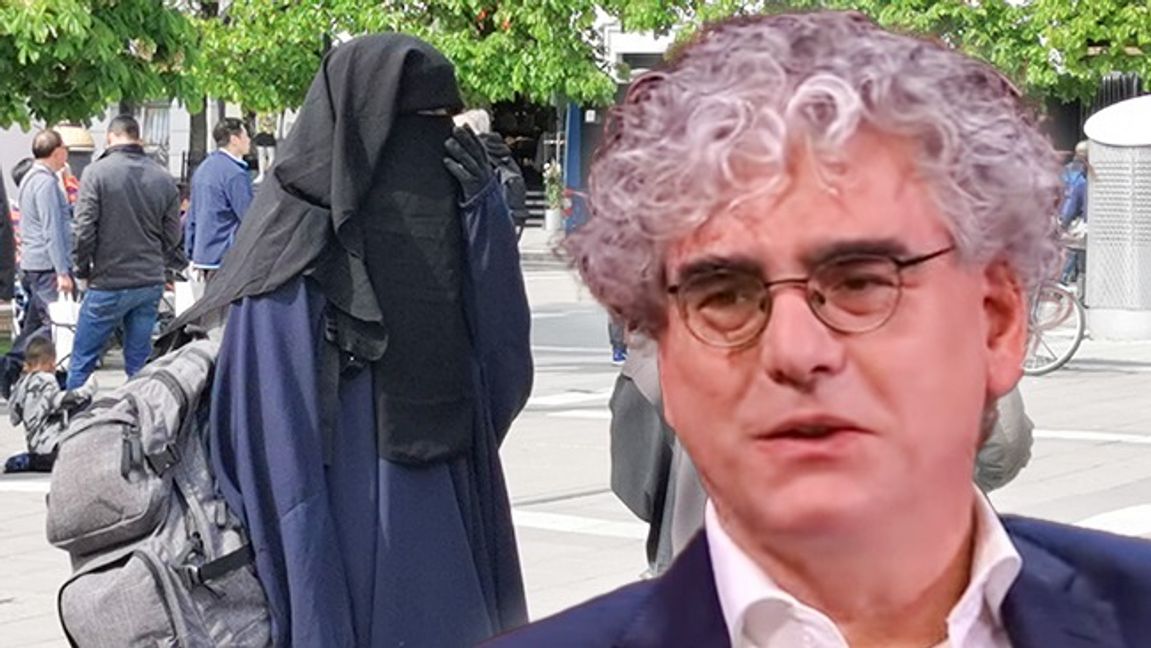
A Dutch report shows that immigration from Africa and the Middle East is very costly. Cultural distance and low education mean that even the second generation costs hundreds of thousands of euros per person. In an interview with Bulletin the author, Jan van de Beek, also says that remigration is
Jan van de Beek is, together with three other authors, the researcher behind the widely noticed University of Amsterdam report Borderless Welfare State showing that non-Western immigration costs the Netherlands billions of euros annually. Immigrants from Somalia cost an average of €606,000 per person over a lifetime. For the second generation from the same region, the cost is nearly €460,000.
Now he tells Bulletin in an interview that the problems don’t disappear with the second generation – on the contrary.
– There are two things the Dutch government cannot change. The first is that they cannot force people to embrace our culture. The second is that they cannot force second-generation children to have higher or lower learning potential, says van de Beek.
Cultural Distance Explains Economic Contribution
Van de Beek’s research shows that cultural distance – together with educational attainment – is a decisive factor in whether an immigrant will contribute economically to the host country. He has used data from the World Values Survey to measure the distance between different cultures.
– Sweden is at the very top in one corner of the cultural world map. You are most inclined towards secularisation and self-development. At the same time, people from the African-Islamic culture cluster have the lowest scores. The cultural distance between the Protestant Europe culture cluster and these countries could not be greater, he says.
When Van de Beek controls for education level, cultural distance still explains approximately half of the 78% explained variation in net fiscal contribution between different groups.
– This applies not only to contribution to the treasury, but also to crime. Everything I say about the connection between education, cultural scores, and net contribution also applies when looking at crime.
The Myth About the Second Generation
In the debate, it’s often said that ”it will work out with the second generation.” What does your research say about that?
– It’s not true. If immigrants outperform Dutch natives, their children are usually extremely well integrated and behave like natives, which are ”budget neutral”. But if the parents provide a (strongly) negative net contribution, the second generation often continues to lag (far) behind. There is only one notable exception: first-generation Chinese immigrants were on average low-skilled and had low incomes, but their second-generation children outperform Dutch natives and do very well. But that’s the exception. It’s particularly interesting that second-generation children from non-Western countries have a higher risk of criminality than the first generation.
Van de Beek believes this may be due to how parents from certain cultures try to raise their children.
– My hypothesis is that the cause isn’t a ”criminal culture”, but rather a cultural mismatch — a gap between the values and child-rearing goals that parents bring from their home country and the norms their children encounter in Dutch society. Most non-Western immigrant parents genuinely try to raise their children well, but when they do so based on upbringing goals that don’t align with Dutch cultural expectations, things can go wrong. And that’s tragic, because many people migrate precisely to give their children a better life.
The Welfare State as a Magnet
According to Van de Beek, the generous welfare states in Sweden and the Netherlands specifically attract low-educated people from the Third World.
– Sweden and the Netherlands are paradise. Northwestern Europe is the villa neighbourhood of the world. Sweden and the Netherlands are among the finest streets in that neighbourhood. Everyone wants to live there, he says.
The combination of low education and large cultural distance makes these groups the most costly for the welfare state. Immigrants from Morocco cost an average of €542,000 per person, from Turkey €340,000.
For the second generation, the problems remain. Second-generation Moroccans cost €482,000, while second-generation Turks cost €294,000 per person.
The Myth of ”More Hands in Healthcare”
A common argument for immigration is that we need more hands in healthcare. What do you say about that?
– It’s nonsense and a myth. First of all, we see increased automation everywhere in the world. Look at the dark factories in China, where the lights can be shut down because no humans are present in the production rooms. So we can replace a lot of typical low-skilled labour migration with robots, as is already happening. This will free a lot of labour in many labour-intensive sectors, workers who can then find employment in other sectors, like healthcare. Secondly, if you bring in migrants who are themselves on average a net fiscal drain, you enlarge the fiscal problem of ageing rather than solving it. Thirdly, in order to alleviate the pressure on healthcare, immigrants at least need to be working more often in healthcare over their life course than natives, which is doubtful in those cases where proponents propose mass low-skilled labour migration as a panacea to address shortages in many sectors.
Van de Beek believes the argument ignores economic reality.
– You cannot solve a welfare state’s problems by bringing in people who themselves become a burden on the welfare state. It’s circular reasoning. Besides, solving the issue of ageing – which underlies the labour shortages – through immigration leads to explosive population growth.
Remigration as a Solution
In Sweden, the ruling center-right coalition has recently introduced a remigration grant (up to circa €30,000 per migrant) for those migrants who decides to return to their country of origin.
What do you think about remigration grants as a solution?
– It’s a very good idea. When people cost €606,000 over a lifetime, as immigrants from the Horn of Africa do, then remigration grants pay off very quickly. Even if you give €10,000 in remigration grants, or €50,000, it’s still extremely profitable.
Van de Beek calculates that non-Western immigration costs the Netherlands enormous sums each year. Based on extremely detailed microdata at the individual level, the total observed net cost for non-Western immigrants amounts to €23 billion in the year 2016. For immigrants who entered in the period 1995–2024 alone, the total lifetime costs for the Dutch treasury amount to approximately €700 billion. For comparison, total natural gas revenues to date have been about €540 billion.
Changed the Political Debate
How has your research influenced the debate in the Netherlands?
– We have had a lot of influence. I have been invited to many ministries, to state secretaries, to the CPB, which is the most important economic advisory institution for the government, and to other state-related think tanks, advisory bodies, a state committee and the latest government formation. The report and my Dutch-language book Migration Magnet Netherlands were read by many politicians and civil servants and mentioned repeatedly in parliament.
Van de Beek says that the so-called Overton window – the framework for what is acceptable to say – has shifted dramatically.
– When I started saying in 2016 that we must leave the UN Refugee Convention and change the European Convention on Human Rights, many people thought you were an extreme person. Now mainstream politicians in the Netherlands are saying the same things.
Parallels to Sweden
Sweden, like the Netherlands, has received many immigrants from precisely the regions that Van de Beek’s research identifies as most problematic. Among other things, both countries have large Somali populations.
A Swedish study from 2018 by Joakim Ruist showed that immigrants on average cost the Swedish state €7,000 per year. Van de Beek’s research goes deeper by dividing into 42 – and in some cases 87 – different regions and calculating lifetime costs.
– I think the big difference between our study and all other studies is the details, says Van de Beek.
His message to Swedish decision-makers is clear: cultural distance and learning potential cannot be changed through political decisions, but are decisive for integration outcomes. Therefore, immigration policies should be very selective with regard to cultural distance (preferably small) and educational attainment (on average at least tertiary education).

